If you’ve ever stepped onto a cold tile floor during a February morning in the Mile High City, you know that “bone-chilling” isn’t just a figure of speech. As Denver homeowners look for ways to make their homes more comfortable while battling rising utility costs, one question keeps coming up: Is radiant floor heating worth it for Denver winters?
As a professional contractor and home improvement strategist, I’ve seen firsthand how this technology transforms a drafty bungalow in Wash Park or a modern build in Cherry Creek into a cozy sanctuary. In this guide, we’ll dive deep into the costs, the technology, and the ultimate verdict on whether you should pull the trigger on radiant floor heating this year.
Why Denver Homes are Switching to Radiant Floor Heating
Denver’s climate is unique. We deal with extreme temperature swings, incredibly dry air, and high altitudes. Traditional Denver home heating—usually forced air—often struggles to keep up without making the air feel like a desert.
The Problem with Forced Air in Colorado
Most Colorado homes rely on furnaces. While effective, they blow hot air to the ceiling, leaving your feet cold. Furthermore, they circulate dust and allergens, which can be a nightmare during our dry winters.
The Radiant Advantage
Radiant floor heating works through infrared radiation. Instead of heating the air, it heats the objects and people in the room directly. It’s the difference between standing in the sun on a snowy day versus standing in a gust of hot wind.
Radiant Heat vs. Forced Air: The Great Debate
When comparing radiant heat vs. forced air, the winner usually depends on what you value most: immediate heat or long-term comfort.
- Comfort: Radiant heat provides an even temperature from floor to ceiling. No more “cold spots” by the windows.
- Air Quality: Because there are no fans or ducts, radiant systems don’t kick up dust. This is a massive win for energy-efficient heating CO enthusiasts who also care about respiratory health.
- Efficiency: Forced air loses significant heat through ductwork. Radiant systems are roughly 25-30% more efficient because the heat stays where you are—on the ground.
2025 Cost Breakdown: Materials and Labor in Denver
Let’s talk numbers. Installing a heated floor is an investment. In Denver, labor rates currently range from $50 to $150 per hour depending on whether you need an electrician or a specialized HVAC plumber.
Cost of Radiant Floor Heating (Per Square Foot)
| System Type | Material Cost (sq. ft.) | Labor Cost (sq. ft.) | Total Installed Cost |
| Electric Mats | $8 – $15 | $3 – $7 | $11 – $22 |
| Hydronic (Water) | $6 – $20 | $8 – $15 | $14 – $35 |
| In-Slab (New Const.) | $7 – $12 | $5 – $10 | $12 – $22 |
Typical Costs by Room (Denver Averages)
- Small Bathroom (50 sq. ft.): $600 – $1,200 (Electric)
- Primary Suite (150 sq. ft.): $1,800 – $3,500 (Electric)
- Whole House (2,000 sq. ft.): $25,000 – $50,000 (Hydronic)
Pro Tip: If you are remodeling a single room, electric radiant floor heating is almost always the better choice. If you are building a new home or doing a “gut” renovation, hydronic systems offer much lower monthly operating costs.
DIY vs. Professional Installation
Can you do this yourself? Technically, yes—but there’s a catch.
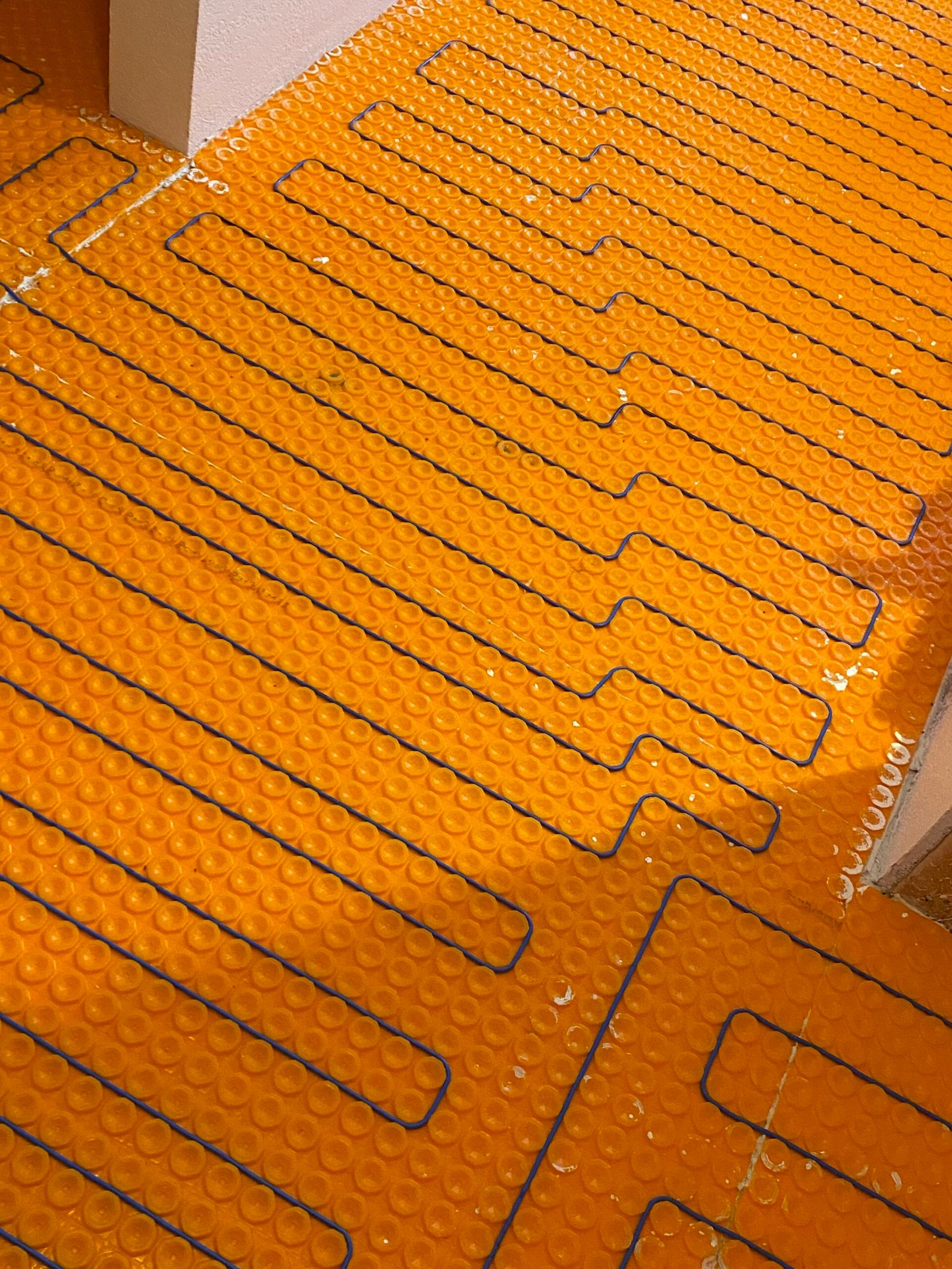
- The DIY Route: You can lay down electric heating mats like the Schluter-DITRA-HEAT system fairly easily. However, you must hire a licensed electrician to hook the system into your home’s breaker panel to meet Denver building codes.
- The Professional Route: For hydronic systems involving boilers and PEX tubing, do not DIY. A single leak under your finished hardwood or tile could cost tens of thousands in damages.
Top Model Recommendations for 2025
If you’re looking for the best bang for your buck, here are the top-rated systems currently dominating the Denver market:
- Schluter-DITRA-HEAT (Best for Tile): The gold standard for bathrooms. It combines an uncoupling membrane (to prevent tile cracks) with heating cables.
- Price: Approx. $450 for a 120V starter kit.
- Warmup DCM-PRO (Best for Large Areas): Known for its high heat output and excellent warranty.
- Price: Approx. $600+ for cable and membrane sets.
- SunTouch SunStat (Best Smart Controls): If you want to control your floors via Alexa or Google Home, their WiFi thermostats are the most reliable.
Is it Really “Energy-Efficient” in Colorado?
Yes, but with a caveat. While radiant floor heating is highly efficient at delivering heat, the cost of electricity in Colorado can be higher than natural gas.
To achieve true energy-efficient heating CO status, we recommend:
- Thermal Insulation: Always install insulation boards (like Cork or Kerdi-Board) beneath your heating elements so the heat goes up into your feet, not down into the concrete slab.
- Smart Thermostats: Programming your floors to warm up 30 minutes before you wake up can save you 15% on your monthly bill.
Conclusion: Our Highest Recommendation
So, is radiant floor heating worth it for Denver winters?
Our Verdict: Absolutely—specifically for bathroom remodeling and basements.
The “worth” isn’t just in the resale value (which increases by about 6-8% for homes with heated floors). It’s in the daily quality of life. In a city where winter lasts from October to May, the comfort of a warm floor is a luxury you will appreciate every single morning.
For most Denver homeowners, we recommend the Schluter-DITRA-HEAT electric system. It is the most reliable, easiest to install during a remodel, and provides the best protection for your expensive tile or stone flooring.

Frequently Asked Questions (FAQs)
1. Does radiant floor heating replace a furnace?
In well-insulated Denver homes, a whole-house hydronic system can replace a furnace. However, electric mats are typically used as “supplemental” heat to make specific rooms more comfortable.
2. How long does it take to heat up?
Electric systems usually take 30–60 minutes to reach full temperature. Hydronic systems have a longer “lag time” but hold heat much longer once the water stops circulating.
3. Can I put radiant heat under hardwood floors?
Yes, but you must use engineered hardwood. Solid hardwood can shrink or warp due to the direct heat and Denver’s low humidity.
4. How much will my Denver electric bill go up?
For a standard 50 sq. ft. bathroom running 4 hours a day, expect to see an increase of about $15–$25 per month.
5. What happens if the heating cable breaks?
Modern systems are very durable, but if a break occurs, professionals use “thermal imaging” to find the exact spot of the break, meaning you only have to pop out one or two tiles to fix it.
6. Is it safe to leave on all day?
It is safe, but not cost-effective. Use a programmable thermostat to lower the temp when you aren’t home.
7. Does it help with “Hard Water” issues in Denver?
Indirectly, yes! Heated floors help evaporate standing water on shower floors and bathroom tiles more quickly, which can reduce the buildup of mineral deposits and mildew.