Bathroom remodeling is one of the most rewarding home upgrades—but it is also one of the most technically demanding. Homeowners often underestimate the electrical requirements, plumbing rerouting, waterproofing, and sequencing involved. Whether you want a simple cosmetic refresh or a full gut-and-rebuild, understanding the true complexity of bathroom remodeling will save you stress, money, and major construction mistakes.
This comprehensive guide breaks down the difficulty level, all major bathroom components, the correct remodeling order, project duration, and a full cost table showing real-world labor and material pricing. If you are planning bathroom remodeling, this is your roadmap to a smooth, efficient, and successful renovation.
Difficulty Level: How Hard Is Bathroom Remodeling?
Bathroom remodeling is considered a moderately to highly difficult home renovation because it requires multiple licensed trades working in a tight, moisture-sensitive environment. Small mistakes—like incorrect slope, poor ventilation, or improper waterproofing—can cause mold, leaking, and structural damage.
Why Bathroom Remodeling Is Challenging
Bathroom projects are harder than kitchen or bedroom remodels for several reasons:
1. Complex Plumbing Systems
You may need to relocate drains, adjust water lines, or upgrade old piping to meet modern code. Drain lines require specific slopes and venting—errors are costly.
2. High Electrical Requirements
GFCI outlets, lighting circuits, exhaust fan wiring, and NEC code compliance must all be handled correctly.
3. Waterproofing Precision
Showers, tubs, floors, and walls must be fully sealed. One gap in the waterproofing membrane can lead to hidden moisture damage.
4. Limited Space
Bathrooms are usually the smallest rooms but require the most components.
5. Building Code Compliance
Contractors must follow national, state, and local codes for plumbing, electrical, ventilation, egress, and safety.
Difficulty Summary
- DIY level: Low to moderate (only surface updates).
- Intermediate level: Moderate (vanity replacement, flooring).
- Pro contractor level: High (full shower build, plumbing reroute, electrical upgrades).
Because of these factors, bathroom remodeling almost always takes more time, money, and skilled labor than homeowners expect.
Bathroom Remodeling Components: What’s Actually Involved?
A successful bathroom renovation includes several interconnected components. Understanding them helps you budget accurately and avoid missteps.
Major Components of Bathroom Remodeling
1. Plumbing Fixtures
- Toilet
- Sink
- Bathtub
- Shower valve
- Drain and venting
- Water supply lines
2. Electrical Components
- Vanity lighting
- Overhead LED
- Exhaust fan
- GFCI outlets
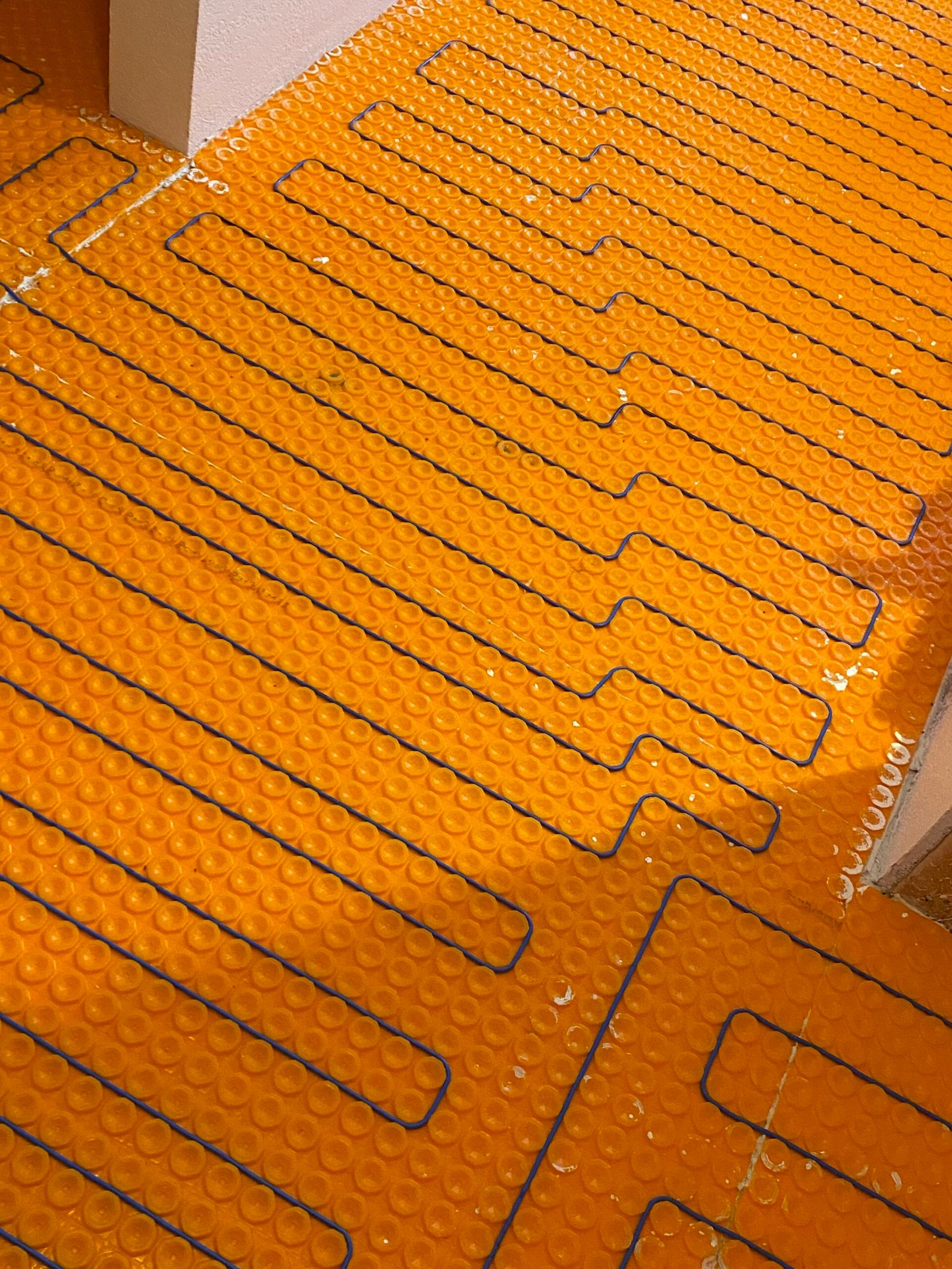
- Optional heated floors
3. Structural Elements
- Drywall
- Framing
- Subfloor
- Niches and pony walls
4. Waterproofing Systems
- Membranes (Schluter, RedGard, Hydro Ban)
- Shower pan
- Slope to drain
5. Finishes
- Tile (floor, wall, shower)
- Paint
- Cabinets & vanity
- Countertops
6. Ventilation
Critical for moisture control and preventing mold.
7. Accessories
- Mirrors
- Shelving
- Faucets
- Hardware
- Shower glass
Every one of these elements influences the next, which is why bathroom remodeling must follow a strict order of operations.
Bathroom Remodeling Benefits
Bathroom renovations offer some of the best returns on investment in home improvements.
Top Benefits of Bathroom Remodeling
1. Increased Home Value
Bathroom updates consistently increase resale appeal.
2. Better Functionality
Improved layout, smarter storage, and enhanced lighting make daily routines easier.
3. Energy Efficiency
Low-flow toilets, LED lighting, and high-efficiency ventilation reduce utility costs.
4. Improved Safety
Updates address:
- Old wiring
- Slippery floors
- Poor ventilation
- Water-damaged structural areas
5. Enhanced Aesthetic
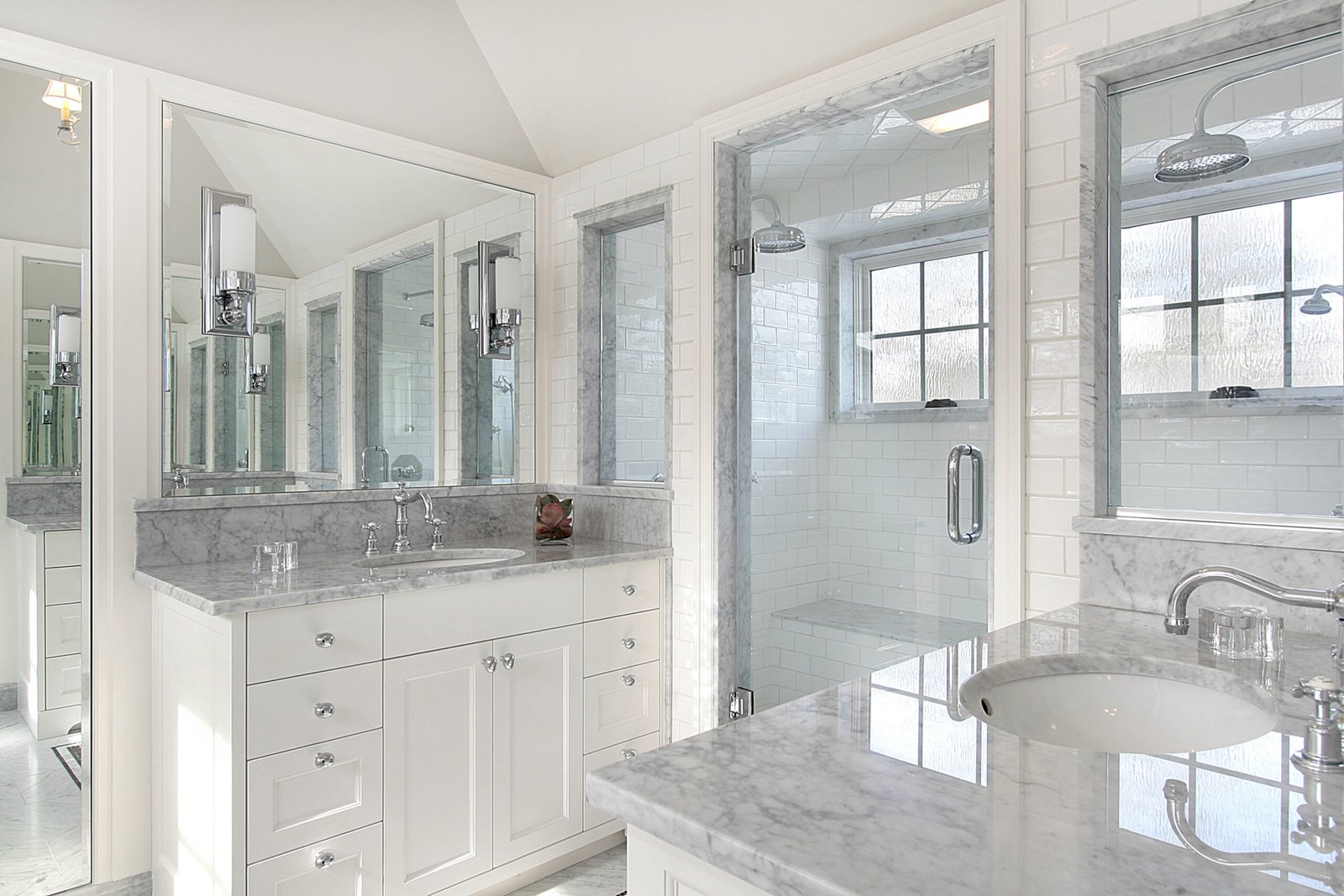
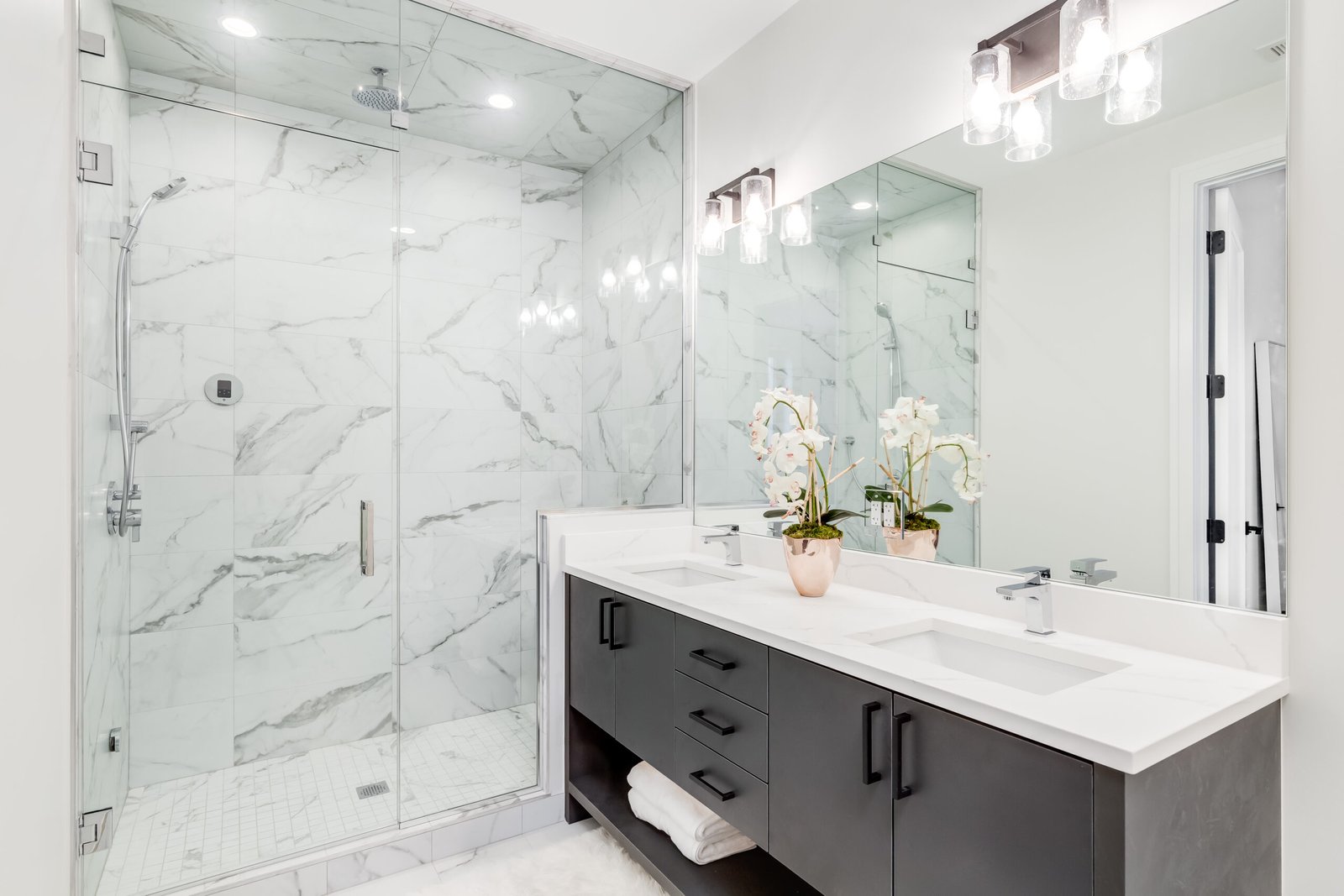
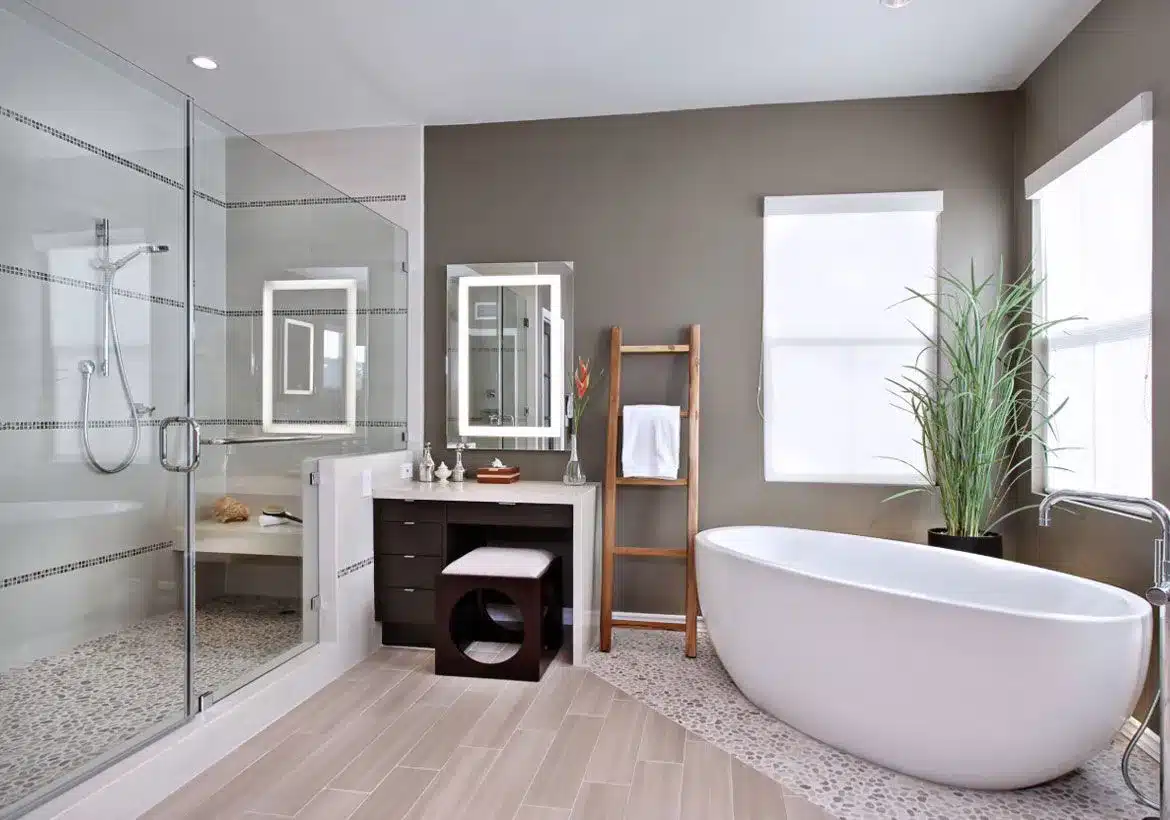
Modern finishes create a spa-like feel at home—one of the most common motivations for bathroom remodeling.
6. Water Damage Prevention
Proper waterproofing adds long-term durability.
When Remodeling a Bathroom, What Comes First?
One of the most common questions in Google’s “People Also Ask” section is:
“What is the correct order for bathroom remodeling?”
Here is the professional contractor sequence:
Correct Bathroom Remodeling Order (Step-by-Step)
Step 1: Planning, Design & Permits
- Measurements
- Floor plan
- Material selections
- Permit applications (electrical, plumbing, structural)
Step 2: Demolition
Remove:
- Tile
- Vanity
- Plumbing fixtures
- Drywall
- Flooring
Step 3: Rough Plumbing
Includes:
- Drain and vent adjust
- Shower valve installation
- Relocating the toilet or sink if needed
Step 4: Rough Electrical
Install:
- Fan wiring
- Vanity lighting wiring
- Switch boxes and outlets
Step 5: Framing Adjustments
Build niches, pony walls, or adjust framing behind new fixtures.
Step 6: Waterproofing & Shower Pan
This is one of the most critical stages—done improperly, it leads to failure.
Step 7: Drywall & Backer Board
Moisture-resistant materials only.
Step 8: Tile Installation
Floors → walls → shower walls → niches.
Step 9: Paint & Finishes
Use high-moisture-resistant paint.
Step 10: Install Fixtures
Vanity, faucets, toilet, shower trim.
Step 11: Install Glass
Custom shower doors often require a 1–2-week lead time.
Step 12: Final Inspection & Cleanup
This sequence prevents mistakes and ensures efficient, code-compliant bathroom remodeling.
How Long Does a Bathroom Remodel Take?
Timeline varies by size, bathroom design complexity, and contractor availability. Most standard bathrooms follow this schedule:
Bathroom Remodel Duration (Standard Timeline)
| Scope | Duration |
|---|---|
| Cosmetic refresh (paint, hardware, vanity swap) | 3–7 days |
| Mid-range remodel with new finishes | 2–3 weeks |
| Full gut remodel with plumbing & electrical | 4–6 weeks |
| Luxury remodel with custom tile + glass | 6–10 weeks |
Key Factors That Affect Remodel Duration
- Material availability
- Lead time for custom glass
- Permit processing time
- Extent of plumbing rerouting
- Tile complexity
A professional contractor can streamline these delays significantly.
Cost of Bathroom Remodeling (Labor & Material Table)
Below is a contractor-grade table showing real-world pricing for common bathroom components. Labor varies by region, but these are nationwide averages:
Detailed Labor & Material Cost Table
| Component | Material Price Range | Labor Price Range | Notes |
|---|---|---|---|
| Vanity (30–60″) | $250 – $2,000 | $200 – $450 | Quartz tops increase price |
| Toilet | $150 – $700 | $150 – $300 | Install time: 1–2 hrs |
| Shower Valve | $120 – $350 | $300 – $600 | Requires wall opening |
| Tile (per sq ft) | $2 – $15 | $12 – $30 | Custom patterns cost more |
| Flooring (per sq ft) | $2 – $6 | $8 – $15 | Tile is most durable |
| Waterproofing | $150 – $700 | $400 – $900 | Critical for longevity |
| Tub | $400 – $2,000 | $300 – $700 | Alcove vs freestanding |
| Shower Glass | $600 – $1,800 | $200 – $400 | Custom glass leads time |
| Exhaust Fan | $100 – $350 | $200 – $450 | Required by code |
| Electrical (lighting) | $75 – $400 | $150 – $600 | LED = energy savings |
Best Recommendation for Consumers
If you want long-term durability, prioritize:
- Waterproofing systems
- Quality tile
- Quartz countertops
- Proper ventilation
These elements drastically increase the lifespan of bathroom remodeling projects.
Conclusion
Bathroom remodeling is one of the most transformative home upgrades—but it requires skill, planning, and a clear understanding of sequencing. When done correctly, it increases home value, enhances safety, improves energy efficiency, and elevates your daily living experience. From plumbing and electrical to waterproofing and tile work, bathrooms are complex systems that must be built with precision. With the right contractor, materials, and planning, bathroom remodeling becomes a smooth, efficient, and rewarding project that delivers lasting value.
Frequently Asked Questions
1. Is bathroom remodeling hard for beginners?
Yes. DIYers can handle cosmetic updates, but full remodels require plumbing, electrical, tile, and waterproofing experience.
2. What is the hardest part of remodeling a bathroom?
Proper waterproofing. Mistakes can cause hidden leaks, mold, and structural rot.
3. What comes first in bathroom remodeling?
Planning → permits → demolition → rough plumbing → rough electrical → waterproofing → tile → finishes.
4. How long does a bathroom remodel usually take?
A full remodel typically takes 4–6 weeks, depending on complexity and materials.
5. How much does a full bathroom remodel cost?
Most homeowners spend $9,500 – $28,000, depending on size and material choices.
6. Do I need permits for bathroom remodeling?
Yes—plumbing, electrical, and structural changes almost always require permits.
7. How do I choose the right bathroom contractor?
Look for licensed, insured professionals with strong reviews and detailed written estimates.